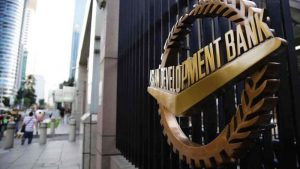
THE ASIAN Development Bank (ADB) has offered the Philippine government up to $1.75 billion in additional financing support to help it manage the economic impact of the Middle East conflict.
ADB President Masato Kanda met with President Ferdinand R. Marcos, Jr. at the Malacañan Palace and said the multilateral lender is ready to provide more funding as the country grapples with the fallout from the war, it said in a statement on Friday.
“The Philippines is ADB’s home, and we see the strain this crisis is placing on Filipino families, workers, and businesses,” Mr. Kanda said. “ADB will act swiftly to support the government to protect vulnerable communities, manage fiscal pressures, and strengthen the economy’s resilience.”
The additional support of up to $1.75 billion will come in the form of policy-based and countercyclical lending, as well as trade finance if needed.
This is on top of some $2 billion in policy-based loans being prepared for the Philippines this year.
The ADB said this can help the government provide assistance to vulnerable Filipinos and mitigate the impact of the war-driven oil supply shock, which has already stoked inflation and slowed economic growth.
“The Philippines has been hit hard by the Middle East conflict because of its heavy reliance on imported oil, fertilizers, and other global commodities,” it said.
“ADB is also working with government agencies to protect vulnerable people and strengthen longer-term resilience. This includes advisory support to the Department of Agriculture on domestic fertilizer security, assistance to the Department of Social Welfare and Development on social protection, and support for energy security, clean energy, energy efficiency, and mass transit investments to reduce exposure to fuel-price shocks.”
The Philippines received $6.81 billion in loans, grants, and co-financing from the ADB last year.
The United States and Israel’s initial attack on Iran on Feb. 28 effectively closed the Strait of Hormuz that normally handles roughly one-fifth of global oil shipments. This has led global crude prices to jump to over $100 a barrel from just $60-$70 before the conflict.
This translated to significantly higher pump prices for the Philippines, which imports over 90% of its oil from the Middle East. The government in March declared a national energy emergency due to the crisis.
The Philippines is also a heavy net importer of food, making it vulnerable to global commodity price shocks.
In April, headline inflation accelerated to 7.2% in April from 4.1% a month earlier, the fastest since March 2023, as the crisis pushed up prices of food and utilities. This is well above the central bank’s 2%-4% annual target.
Meanwhile, gross domestic product growth slowed to a new post-pandemic low of 2.8% in the first quarter as the fallout from a corruption scandal and soaring oil prices dampened economic activity.
The ADB expects the Philippine economy to expand by 4.4% this year, below the government’s 5%-6% goal, according to its Asian Development Outlook April 2026 report. — Bettina V. Roc